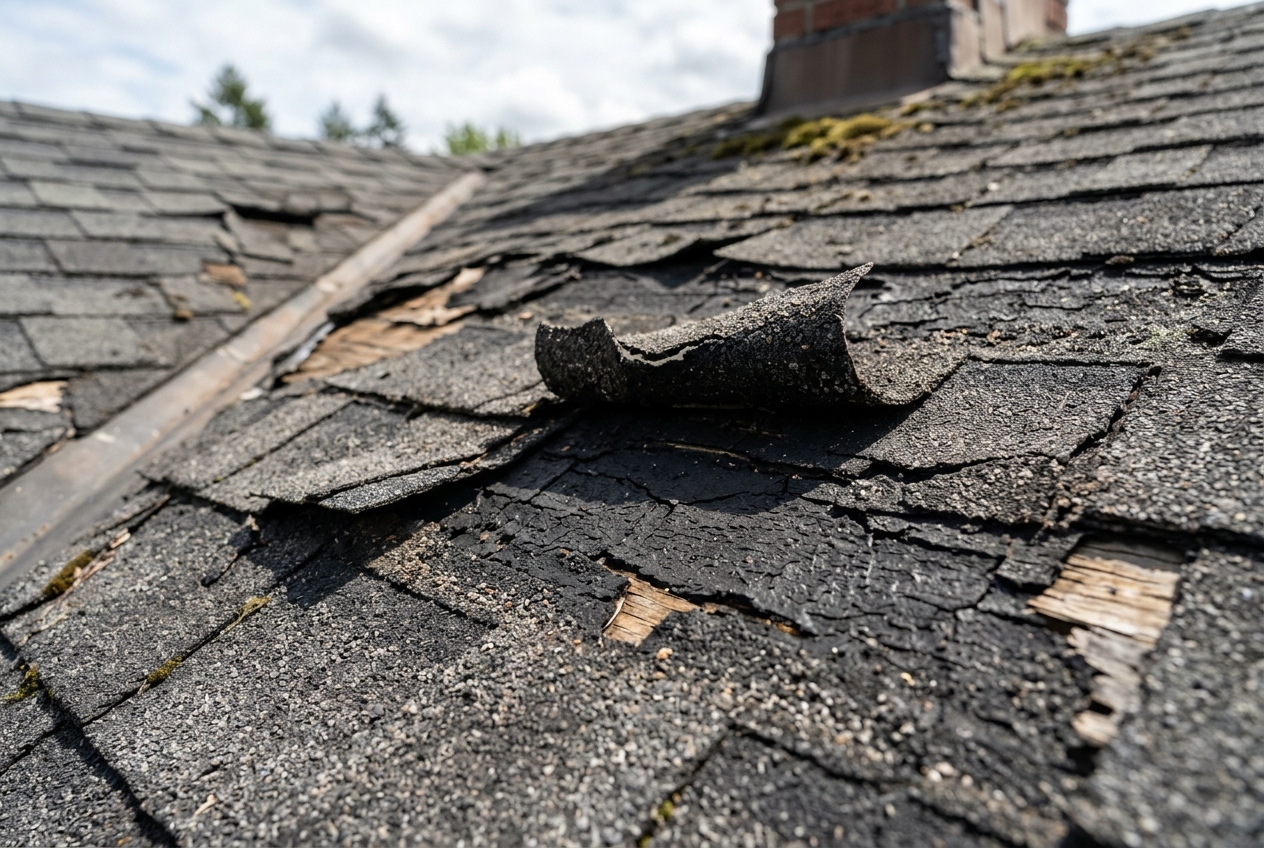
Key Engineering Takeaways for Property Owners
- • Surface Granule Depletion: Once 30%+ of protective mineral granules wash away into gutters, asphalt oils bake out under solar UV within 12 to 24 months.
- • Curling & Cupping Tabs: Thermal shock cycling hardens shingle tabs, causing them to curl upward or cup concave, breaking adhesive seal strips.
- • Decking Sponginess & Deflection: Soft spots when walking the roof indicate chronic moisture saturation of structural plywood or OSB sheathing.
- • Systemic vs Localized Failure: When leaks appear at multiple independent penetrations or age exceeds 20-25 years, reroofing yields superior ROI over patchwork.
1. Understanding Roof System Longevity & Structural Realities
A residential or commercial roof is far more than a decorative exterior surface. It is a complex, multi-layered thermodynamic shield that protects the property's structural framing, insulation, electrical conduits, and interior living spaces. Despite this vital role, the roof is frequently the most neglected architectural component of a property until an catastrophic ceiling leak forces emergency action.
In the United States, roofing assemblies endure severe environmental punishing factors. From scorching summer heat waves that drive surface roof plane temperatures past 160°F (71°C) to sub-zero winter freeze-thaw cycles, high-velocity convective thunderstorm winds, and driving hail strikes, roofing materials are subject to constant chemical, mechanical, and thermal fatigue. Knowing how to assess these forces—and understanding the precise threshold between a simple localized flashing repair and a necessary full roof replacement—can save property owners tens of thousands of dollars in secondary structural damage.
2. Material Science: How Different Roofing Assemblies Degrade Over Time
To understand the mechanics of roof failure, one must evaluate the chemical composition and structural anatomy of common roofing substrates:
Asphalt Composition & Volatile Oil Depletion
Asphalt shingles consist of an inner fiberglass mat saturated and coated with asphalt bitumen, then capped with ceramic-coated mineral granules. Solar ultraviolet (UV) radiation triggers photo-oxidation in the asphalt, depleting its volatile plasticizing oils. Over a 15- to 25-year period, this oil loss causes the asphalt to harden, embrittle, and shrink. As the asphalt shrinks, it loses its grip on the mineral granules, accelerating granular shedding and exposing the delicate fiberglass scrim to direct atmospheric weathering.
Thermal Shock Cycling & Differential Movement
Every daily sunrise and sunset produces thermal expansion and contraction. On metal roofs, panels expand longitudinally; if installed with improper fixed fasteners rather than engineered sliding expansion clips, thermal forces will buckle panels, shear screw shanks, and elongate fastener holes. On shingle and tile roofs, thermal shock ruptures perimeter mortar reglet joints and separates step flashings from masonry chimneys.
Hydrostatic Head & Capillary Migration
Water behaves according to gravity and surface tension. On low-slope roofs (under 2:12 pitch) or behind valley debris dams, pooled water generates hydrostatic head pressure. Water does not simply roll off; it exploits capillary action, drawing itself uphill beneath unsealed shingle laps, through nail penetrations, and into absorbent plywood sheathing.
3. Forensic Diagnostic Symptoms: Repair vs. Replacement Matrix
Use the following engineering evaluation matrix to determine whether your roof's observed symptoms indicate isolated maintenance or systemic end-of-life replacement:
| Observed Symptom | Structural Root Cause | Recommended Engineering Action |
|---|---|---|
| Granules in Gutters / Splash Blocks | Asphalt binder photo-oxidation and surface erosion | Minor in years 1-10; if widespread after year 18, indicates full replacement within 12-24 months. |
| Curling, Cupping, or Clawing Tabs | Differential shrinkage between top asphalt coating and bottom scrim | Full replacement. Shingles have lost mechanical flexibility and blow off easily in 40+ mph winds. |
| Isolated Water Stain Near Chimney | Mortar reglet joint cracking or rusted step flashing | Localized repair. Grind mortar joint, install custom copper counter-flashing, re-caulk with polyurethane. |
| Spongy Feel Underfoot on Decking | Delaminated plywood or rotted OSB sheathing from chronic condensation or leaks | Mandatory tear-off. Cut out compromised sheathing, install 5/8" CDX plywood, re-nail framing to code. |
| Dented Metal & Bruised Shingles After Hail | High-velocity hail kinetic impact fracturing fiberglass mat | Full insurance forensic audit. Certified inspector marks test squares for insurance claim submission. |
4. Lifecycle Cost Analysis: The True Economics of Timely Action
Many homeowners hesitate to replace an aging roof due to upfront capital requirements. However, actuarial property data reveals that deferring a needed roof replacement by just 2 to 3 years dramatically increases total property ownership costs:
- Interior Secondary Damage: Active roof leaks rarely remain confined to the roof deck. Water rots ceiling joists, ruins blown-in fiberglass insulation (reducing R-value by up to 50%), stains hardwood floors, and prompts toxic black mold remediation costing \,000 to \,000+.
- Energy Inefficiency: Wet attic insulation cannot insulate. Homes with compromised roof moisture barriers experience 15% to 25% higher monthly heating and cooling bills due to continuous thermal bridging.
- Uninsurability Risks: Major American home insurers are actively cancelling policies or excluding roof coverage on homes with roofs older than 15-20 years. Proactively installing a modern Class 4 impact-resistant roof unlocks 10% to 25% annual premium discounts.
5. Step-by-Step Property Owner Preventative Action Protocol
- Conduct Biannual Ground-Level Binocular Audits: Every spring and late autumn, walk your property perimeter with binoculars. Inspect ridgelines for straightness, verify chimney flashings are seated, and check gutters for heavy grit accumulation.
- Perform Safe Attic Flashlight Inspections: During heavy rainstorms, climb into the attic space with a high-lumen flashlight. Check the underside of roof rafters and sheathing for water trails, dark staining, or rusted protruding nail shanks.
- Clear Overhanging Tree Branches: Trim back all tree limbs to maintain at least 10 feet of clearance from roof planes. Overhanging branches drop acidic leaf debris, harbor pests, and scrape protective mineral granules away during windstorms.
- Ensure Clean Gutter & Downspout Flow: Clogged gutters back up water under eave drip edges, rotting fascia boards and soffit vents. Install gutter guards or clean gutters thoroughly before freeze cycles begin.
- Schedule a Certified Professional Diagnostic Inspection: Never climb steep roofs without professional fall arrest equipment. Engage a licensed contractor through Roof Expert USA to perform an ultrasonic FLIR moisture survey and itemized condition report.
6. Frequently Asked Questions (FAQ)
How long does an architectural shingle roof really last in the USA?
In moderate climates with balanced attic ventilation, modern architectural shingles typically provide 20 to 25 years of reliable service. However, in regions with severe UV index ratings, high hail exposure, or poorly ventilated attic spaces, effective lifespan can decrease to 15 to 18 years.
Can I install a second layer of shingles over my old roof to save money?
While building codes in some jurisdictions permit two layers, roofing engineers strongly advise against it. 'Nail-over' installations trap heat, cut shingle lifespan by 30%, prevent inspection of rotted plywood decking beneath, and void most manufacturer non-prorated warranties. A complete tear-off is always the superior investment.
What is the fastest way to get an accurate, itemized estimate?
You can use our online 6-step project wizard or call our 24/7 central dispatch hotline directly at (888) 208-4155. Inquiries submitted through our platform are routed directly to our engineering coordinators at [email protected] for prompt contractor dispatch.
Consult with a Certified Roofing Specialist
Need a professional opinion on your roof's condition? Connect with a licensed, insured roofing contractor in your local market. All inquiries are tracked and coordinated via [email protected] or our direct toll-free dispatch line.